lunes, 13 de julio de 2015

Incomunicados por la comunicación

Paradojas...


domingo, 12 de julio de 2015

Classic collection by Bob Masters


Photos by Bob Masters
(http://www.bobmastersphotography.com/es)

domingo, 21 de junio de 2015

Fotos de estudio

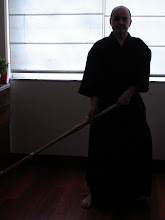
Kendopitecus en kamae


Tomadas por Bob Masters
http://www.bobmastersphotography.com/es

Difícil de etiquetar

Humor? Kutrelux? Prensa seria????

miércoles, 10 de junio de 2015

Una de ninjas

Exhibición de Judo y Kendo en el Holborn Stadium


Filmación en la Alemania Nazi (1936)

Muso Jikiden Eishin Ryu


Exhibición de  Sato sensei

domingo, 7 de junio de 2015

Un bogu para celebrar la Champions!


Reflexiones sobre la vía de la espada


A master kendo sensei discusses how timeless notions of stillness and movement come together through the modern lens of Japanese sword fighting. More on http://mb.mercedes-benz.com/en/88649/...

Experience the world of Mercedes-Benz: http://benz.me/international/ 

sábado, 6 de junio de 2015

iaido. Katas con espiritu


viernes, 5 de junio de 2015

Naginata vs Kendo


Nippon Budo Delegation Düsseldorf

Poland-Warsaw, Torwar 30.10.2007

Muso Shinden Ryu


Ide Tomota sensei (Iaido 8th dan Hanshi). Nov. 5, Moscow, Russia.

How to sit?

Does Japanese tea ceremony fascinate you? Everyone sit in a small tatami room and taste bitter matcha tea. Entire ceremony follows the very elegant ritual. Tea ceremony, as well as other Japanese traditional arts such as calligraphy, kado (flower arrangement) or Aikido, carries a zen philosophy. During the ceremony, people sit in seize (正座). You haven´t seen sieza? It looks like this, sitting on your heels. 
The word seiza is written 正座 in Japanese. 正 (sei) means correct and 座 (za) means a seat. Actually the kanji for to sit is 坐 but because of the regulation of toyokanji (当用漢字/ list of kanji for daily use), it has been decided to use 座 instead of 坐. Anyway, seiza has a meaning of “sit correctly”. 
This is why, everyone, including Japanese people, thinks this is the right way to sit in Japan. 
Is seiza really the traditional way to sit for Japanese people? 
Not really. I mean yes, it´s one of the traditional ways of sitting but not the only one, moreover this way of sitting is relatively new. It was introduced after the Meiji Restoration. 
According to a specialist in mind-body interventions of ancient Japanese, Hidemasa Yatabe, the concept of seiza and even the name was created by the government structured in the Meiji period. In other word, seiza was formed in the late 19th century by learning at schools and became the formal way of sitting for Japanese people. Surprisingly, seiza is a quite new custom for Japanese people.  
Then, what was the traditional way of sitting for Japanese people? Nothing fixed. If you look at the painting on fusuma doors, ukiyoe or statues of the shoguns and monks, they sit in variety of ways. You will find some in sieza but they are not the majority.
You may be surprise but the master of the tea ceremony, Sen no Rikyu (千利休) made tea in Tatehiza (立て膝) . Can you imagine, the grave tea master makes tea with one knee up in front of the important shoguns?
Other ways of sitting are Anza (安座). You cross the toes in front of you. If you practice yoga, this may be familiar to you. 
Agura (あぐら). You cross your legs a little deeper than anza. This is a quite common way to sit on the floor for us now too. Some say Agura causes bowlegs that many Japanese girls suffer. 
Rakuza (楽座). You put the back of the feet together. I see many babies sit this way but for adults this may not be the most comfortable one. I´ve seen people having trouble with this in yoga classes. 
Rakuza seems to be a common way of sitting for the ancient Shoguns or the Emperors.
Wariza (割座) also called onesan zuwari (お姉さん座り). First you sit seiza then slide the legs on one side. Your bottom is on the floor. This samurai is even leaning onto his sword. 
Sonkyo (蹲踞) is what Japanese call, unching style (うんちんぐスタイル) because this is how people crouch in the toilet. Samurai were sitting this way even in the Edo period. In the samurai TV programs, all of them sit in seiza but in the reality, sonkyo seemed to be more common.   Sonkyo is also called, “Yankii zuwari (ヤンキー座り)”. Bad youngsters in the 80s would sit like this and the name was established.
Kikyo (跪居). It looks like sonkyo but you lift the heels and sit on the toes. If you have seen sumo, this is kikyo. 

The image of samurai sitting seiza style seems to be the influence of TV programs and films. Have you ever sit seiza? Maybe you are better than me but I can´t do it even for five minutes. After 10 minutes, my legs are already numb. Samurai were warriors and had to be always attentive to a sudden attack. It wouldn´t have much sense if they had numb feet and could´t fight. You could say that samurai must´ve been used to it. Perhaps, but it´s not practical. Sitting seiza could impede a quick reaction to the enemies. Until the mid Edo, the correct way of sitting (seiza) was agura (cross legs) or Tatehiza (one knee up). What we call now seiza was called Kiza (危坐/跪座). 
Tatehiza is more appropriate for Samurai. 
So when people sit in seiza? 
Samurai were obliged to sit seiza to see the shogun in Edo period. It was the way to sit to show the obedience and loyalty. 
In the middle of Edo period, seiza was becoming more common. The book 正座と日本人 (Seiza to Nihonjin / Seiza and Japanese)” explains that seiza was a symbol of the control of Shogunate. Shogun and Daimyo (feudal lord) forced the lower class samurai to show the obedience. Or perhaps it was introduced as a courtesy in the hierarchy society.
When I was at school, seiza was used for a punishment. If we forgot homework, seiza. If we forgot any class material, seiza at the back of the room. If we don´t listen to the teacher, seiza. In the sense of obedience, it´s still functioning. But this could make more Japanese people dislike seiza. 
There is Japan Seiza Association in Japan. Their aim is to give better image about seiza and talk about anything related to seiza; history, furniture or event. If you can read Japanese, maybe it´s interesting to have a look.

miércoles, 3 de junio de 2015

Sable coreano (Free style)

Una de chinos….

Kung Fu Hero (2013) Action movie English subtitles

El examen más difícil


Harder than becoming a lawyer or a surgeon in Japan is becoming a 8th dan Kendo Swordsman. Chronicles 2 men and their attempt to reach that peak - one is a former National Kendo Champion who has failed the very 1st step of the test 4 times. The other is a 78 year old man who has been taking the test for 24 years.

lunes, 1 de junio de 2015

Iaido Demostración de Sete-iai en el 16th world Kendo Championship

Oji waza

Taken from: Explaining how to execute Oji Waza, or at least trying! (http://shinaiworld.com/execute-oji-waza/)Although in Kendo we practice to strike only four targets ( Men, Kote, Dou, Tsuki), kendo offers a broad range of techniques (to keep it short I will focus on the execution of Oji Waza).
The  most popular description of Oji Waza I have read and heard counter attacking techniques. Most people describing the execution of Oji Waza would tell say is a “reaction to your opponent’s technique.” The problem with this description is that it is incomplete.
Many high ranking sensei explain that Oji Waza starts before your opponent’s attack, with the use of seme and pressure towards your opponent. Although we consider it to be a reaction, you want to have the control of the moment and not just stand there waiting for your opponent to do something.
The most common mistake we make when practicing and/or using Oji Waza during Keiko is that we make a decision on what technique we are going to execute before we approach our opponent and then we wait hoping that our he/she use the technique we are waiting for. This not only stops you from having control of the situation but also takes away your freedom to execute an appropriate technique according to the situation.
Read this from “AVI ROKAH” a Karate practitioner.
“It is important to understand that what I do is not a conscious choice; it is not in the brain, because there is no time for judgment, analyzing, decision and than movement.
If I choose what I will do to react, first it takes time and second I am stuck in my choice and not free to do what is necessary at the moment.”
( taken from here)
We must train the appropriate reaction in order to successfully do Oji Waza and that we can do frequently during practice, but what is often forgotten (specially at lower ranks) and that we must also train is  what comes before,  which is controlling the situation and making your opponent attack you.
The way it has been explained to me and I understand it is that you most approach and pressure your opponent to the point where he/she has no other option but to attack (and if he doesn’t then you should be in the right distance situation to attack), and then once your opponent is committed to an attack you counter.
In case you don’t know them yet, the different Oji Waza can be divided (according to the book “Best Kendo Waza”) into the following categories.
  • Kaeshi
  • Nuki
  • Suriage
  • Uchiotoshi
Because I like to see things more than reading about it enjoy and study the following video, in which the sensei demonstrates the approach forward before executing the counter technique.


Kendo rules...


The importance of breathing in Kendo

In Kendo is not uncommon to see many sensei practicing with as many kenshi as time allow, and is not uncommon for us to ask our selves how do they do it. Through training sensei develop the ability to use energy efficiently, and to avoid unnecessary and wasteful motions.
A very important skill that most sensei seem to have is the ability to breath properly through their time fighting. Most people don’t realize this, but there is more than one way to draw oxygen into our lungs. The most common response when asked to take a deep breath is for people to expand their chest and slightly arch their back. Not only this results in unnecessary tension in several muscles, it also prevents  people from filling their lungs completely
The most effective way to breath is Diaphragmatic breathing, simply put it means breathing using our diaphragm to bring the air into our lungs. When you don’t use the diaphragm to breath you are activating accessory muscles to bring the air in which not only gives you less air, but also it wastes more energy. You should learn to use your diaphragm for breathing, not only because is more efficient but also because is the first step towards learning to use the Hara.
Relearning to breath is not quick, but it is simple. First laying down take a couple of breaths and with your hands try to find the spot that rises when air goes in your lungs. Then Inhale slowly through your nose keeping the focus on raising your stomach. Count to 2. As you inhale, your stomach should move out. Breathe out through pursed lips. Count to 4. As you exhale, you should feel your stomach move in.
To improve breathing is recommended to train your diaphragm a couple of minutes a day. If you feel that it is becoming easy, you can also develop the strength of your diaphragm by working against resistance. You can use weight on your stomach and work against it (start with little weight at first).

lunes, 18 de mayo de 2015

Haiku al queso y al beso


Placer pequeño
Degustar fruta y queso
Soñar con besos

CCB (5-7-5)
A mi abuela que siempre me recordaba que uvas con queso saben a beso.

Kyoto Taikai 2015 – Sakudo vs Ajiro


Un video del Kyoto Taikai de este último año. Sakudo Sensei vs Ajiro Sensei

domingo, 10 de mayo de 2015

9 Dan de Kendo


Ota sensei, Shigeoka sensei, Ono sensei, Nakakura sensei

Seminario con Jean Jaques Sauvage II: Bellvitge


Hoy hemos completado el seminario entrenando en el Polideportivo de Bellvitge. Un poco liado llegar desde el Maresme pero preguntando se llega a Roma y en este caso a Bellvitge. Mucho Iaidoka y poco espacio pero nos hemos apañado. Hoy ha sido el día de las katas difíciles. Junto a Mae y Ganmen Ate hemos repasado Uke Nagashi y Soete Suki para acabar el curso repasando Nuki ichi. Muchas explicaciones y muchas correcciones. A pesar de haber legado una más hora tarde de lo previsto a casa contento con lo aprendido y el rato pasado aprendiendo y disfrutando.

sábado, 9 de mayo de 2015

Iaido con JJ Sauvage

Hoy segundo día de seminario de Iaido con Jean Jacques Sauvage. Lamentablemente no pude ir ayer por la noche al primer entreno, pero hoy si he podido disfrutar de un día entero de Iai y mañana por la mañana si no hay impedimento completaremos el seminario. Como siempre muy didáctico y ameno.
Base a primera hora y Mae por la mañana, Por la tarde Kesa-giri, Morote-suki y Sampo-Giri. Mañana más!


viernes, 8 de mayo de 2015

Amor a flor de piel (Haiku primaveral)

Tacto y ternura
Tu piel junto a la mía
Entrelazados

CCB
5-7-5

martes, 28 de abril de 2015

Renshi, Kioshi,Hanshi...

…….En el mundo de las artes marciales japonesas se otorgan variados títulos honoríficos a aquellos artistas marciales que han alcanzado altos niveles de maestría. Entre ellos, los más prestigiosos son los conocidos RenshiKyoshi y Hanshi otorgados por la Dai Nippon Butoku Kai (大日本武徳会) o “Gran Sociedad Japonesa de Las Virtudes Marciales” que es a su vez es la entidad reguladora central y promotora principal de las artes marciales japonesas ya que, entre otras cosas, fue fundada y es auspiciada por la propia Corte Imperial Japonesa y compuesta únicamente por los mejores y más reputados exponentes de la cultura marcial nipona. Dicho esto, es fácil comprender la magnitud significativa de los títulos que ésta organización otorga, que además son equivalentes a grados universitarios.

…….Muchos han querido formar parte de la DNBK pero no todos logran acceso. La mayoría de los casos debido a que las credenciales que presentan, o no son suficientes o generan dudas en cuanto a su autenticidad o procedencia. En otros casos porque lo que exponen no se corresponde con lo que aseguran. Sobretodo cuando se trata de Gendai Budo (arte marcial moderno) y el fundador del estilo es quien aspira el reconocimiento de su arte. En ese punto la DNBK evalúa si su propuesta en realidad se trata de un arte marcial concreto y completo o no. Por eso, la titulaciones que otorga la DNBK son tan prestigiosas; y es que además emulan los títulos Samurai que en el pasado otorgaba la Familia Imperial Japonesa en tiempos feudales.
…….Estos títulos no se corresponden al sistema Kyudan (sistema de graduación moderno). Son títulos otorgados de manera distinta y su criterio es independiente a la graduación que se ostente, por lo que es muy difícil conseguir esta titulación: Se requiere, además de ser miembro ejemplar de la sociedad, haber acumulado cantidad de méritos previos y hacer un aporte importante al mundo de las artes marciales.
…….Los Shogo (称号) o “títulos” de la DNBK son los reconocimientos ambicionados por todos los instructores de artes marciales japonesas; suele decirse que: “no importa cuántos reconocimientos alternativos puedas acumular, si no tienes un Shogo de la DNBK no estás titulado oficialmente”. Los Shogo actúan como autentificadores de la doctrina marcial que representa el aspirante, pues, la DNBK también resguarda el acerbo cultural marcial nipon para las generaciones futuras.
Las titulaciones del Shogo son:
…….RENSHI (錬士): Que significa “Persona Pulida” en categoría magistral. Para serRenshi se requiere tener 6to Dan o superior, 40 años de edad como mínimo y presentar una tesis relativa a alguna técnica, táctica o filosofía de su disciplina ya que este título es equiparable a una Licenciatura universitaria.
…….KYOSHI (教士): Que significa “Persona que Enseña” o sea, de la que se puede aprender, que en categoría magistral se entiende como “Filosofo” ya que es capaz de enseñar la filosofía de su arte. Para ser Kyoshi se requiere tener 7mo Dan o superior, 48 años de edad como mínimo, haber sido Renshi por al menos 6 años y presentar una tesis relativa a alguna técnica, táctica o filosofía de su disciplina que superada la evaluación inicial deberá ser defendida ante un Comité ya que este título es equiparable a un Master universitario.
…….HANSHI (範士): Que significa “Persona Ejemplar” que en la categoría magistral se refiere a “Maestro” en todo el sentido del término ya que es el grado más alto. Para serHanshi se requiere tener 8vo Dan o superior, 58 años de edad como mínimo, haber sidoKyoshi por al menos 8 años y presentar una tesis relativa a alguna técnica, táctica, filosofía o pedagogía de su disciplina que deberá ser defendida ante un Comité ya que este título es equiparable a un Doctorado universitario.
…….(Obsérvece que estos títulos giran en torno al kanji “士” (“shi“) que significa “escolar”, “académico”, “caballero”, “soldado” y también “samurai”.)
…….Por último está el título: MEIJIN (名人): Que significa “Gran Persona” y es el más alto honor que otorga la DNBK ya que en categoría magistral se refiere a un “Iluminado” o “Sabio”. Meijin es un honorífico que se ha otorgado solo a pocos Hanshi que han dedicado su vida a las Artes Marciales Japonesas y han servido a su familia, a su comunidad y a su arte de manera ejemplar en todos los aspectos. Meijin va más allá de las habilidades físicas ya que su esencia es espiritual.
…….Estos títulos han sido adoptados por otras organizaciones marciales de gran prestigio y reconocimiento igualmente reconocidos por la Corte Imperial Japonesa, el Gobierno Central Japonés y sus respectivos Ministerios relacionados haciendo que estas titulaciones sean reconocidas como tales en cualquier ámbito de la sociedad, como cuando se habla de un Médico, un Abogado, un Ingeniero, etc.
…….Cabe señalar que el Sogo de la DNBK se contrapone al aspecto deportivo y/o mercantilista que actualmente se ha hecho práctica común en las artes marciales japonesas y su criterio para otorgar títulos no se corresponde automáticamente con la obtención de grados o títulos internos de cualquier Dojo. En la DNBK el mérito comienza por la honestidad, la transparencia y una trayectoria comprobable e impecable al punto de ser ejemplar, después de allí: las evaluaciones. Los títulos de la DNBK son muy difíciles de conseguir. Muchos titulados como “Shihan“, “Master“, “Grand Master“, “MenkyoKaiden“, “Soke” o “Shosei” que, aún siendo mundialmente reconocidos, lo han intentado y han fracasado.

Tomado de https://kokibugeishakai.wordpress.com/2012/07/01/hello-world/

lunes, 20 de abril de 2015

Toshiya ISHIDA -MK Kazuo FURUKAWA - 13th Japan 8dan KENDO Championship - Final 31


Un poco desconsiderado el Kamae y el Sonkio de Ishida tras perder el combate. 

domingo, 19 de abril de 2015

Arte? No por favor que somos modernos

El viernes me encontré con mi buen amigo César y charlamos un rato mientras él entraba al Karate y yo salía del Iaido. Me contó sus nuevos proyectos, entre ellos una misteriosa patente que no me atrevía a preguntarle de que era pues parecía ser un secreto celosamente guardado y tuve la impresión que preguntar era profanar un templo inmaculado. Pero seguro que pronto sabremos de que se trata en alguno de sus blogs. César es un Leonardo del siglo XXI. Pintor, escritor, inventor, decorador,… y sobre todo una persona noble y honesta.  Hoy viendo este vídeo me he acordado de algunos posts publicados en sus blogs.

Día de cometas

Hoy en El Masnou es la diada de fer volar els estels. La playa llena de familias y el cielo lleno de cometas. Me gusta vivir en EL Masnou. Cerca de la metrópolis en kilómetros pero tan lejos en el ajetreo del vivir del día a día.


El lechón viajero en Porto

El fin de semana pasado estuve en Foz do Douro y Oporto. Aproveché para reencontrar raíces. Visité a mi familia en Gaia y paseé por la playa de Miramar. Recuerdos de mi infancia feliz en un presente feliz.


Ah y no podían faltar los bolinhos de bacalhau de mi tía Laurita...

PS: Me comí más de 30!!!!


All about Iaido

IAIDO - the way of the sword, is a martial art form that began as an off-shoot of kenjutsu. It was developed as a defensive method to counter surprise attacks and enemy raids in fifteenth and sixteenth century Japan. The purpose of iaido was to slay an opponent with one stroke of the sword immediately after unsheathing it. In order to create such a defense system, situations and circumstances of surprise attacks were studied to devise a systematized way to use the sword effectively against many forms of attack.

The practice of this martial art requires a solemn spirit, extreme concentration, and skill. Every motion, such as the movements of the arms or legs and body, must correspond to the offensive motions of the opponent, and it is of utmost importance that a person follow the rules of discipline that have been carefully and thoroughly applied.
The secret to iaido is a calm spirit. With a tranquil heart you put your hand on the hilt of your sword - in a split second your hand moves to cut down the opponent and resheath the sword - then return to your composed mind. A serene spirit must be cultivated at all times. It is said that the sword is like the mind, and if the sword is upright, the mind is upright. But if the mind is not upright, the sword can never be wielded properly.
Even though you may devote yourself to it with all your heart and soul, it is very difficult to master iaido completely. It is possible, though, to move one step at a time toward the ultimate goal through practice.


sábado, 18 de abril de 2015

Una visión optimista


viernes, 3 de abril de 2015

Como lechón con Tenugi nuevo


Al fin llegó mi Tenugi de la Associação Portuguesa de Kendo  Kendo Team Portugal

El Lechón viajero en Cartagena de Indias


Han pasado días desde que regresé de mi querida Colombia. Es un país que no me canso de visitar. Estuve como es habitual en estos tiempos escasos días. Los tres que me llevó el trabajo a Cartagena de Indias. Aún así pude disfrutar de unos atardeceres espectaculares en la playa frente al hotel y de una tarde de paseo por la ciudad antigua. Lechones, es un lugar que merece la pena conocer!


domingo, 1 de marzo de 2015

Las cosas no son lo que parecen


My Way interpretada por Andre Rieu en New York

Ser o no ser


"Mudar e ser mudado
e lembrar-se,
ver e rever,
sonhar e esquecer e rir,
saber e já não saber nada,
e encontrar e duvidar
e estar presente."