lunes, 28 de septiembre de 2015

Ayer eclipse

Por una extraña coincidencia del destino ayer me desperté un poco antes de las 5 de la madrugada y sin haberlo previsto alcancé a ver el eclipse lunar


Llamadme a mi también tiquis miquis...


Conciencia urbana


En las calles de Barcelona. En todo lado hay gente incívica q no recoge las necesidades del perro (aunque esta de la foto tiene aspecto humanoide) pero también hay quien le pone sentido del humor a la falta de urbanidad.

Preparándonos para salir a cenar

Real como la vida misma


domingo, 27 de septiembre de 2015

Eclipse total de superlua


Domingo há eclipse total da superlua
Fenómeno raro só volta a repetir-se em 2033.
Na noite de domingo para segunda-feira quem estiver em Portugal continental, nos Açores e na Madeira vai poder um eclipse total da superlua. Este fenómeno raro ocorre quando a Lua atravessa a sombra da Terra e fica cor de ferrugem. A última vez em que este fenómeno aconteceu foi há 33 anos, em 1982, e só volta a repetir-se em 2033.

O eclipse vai fazer com que na madrugada de segunda-feira a Lua esteja mais perto de nós do que é habitual, a apenas 356 877 quilómetros de distância. Como no domingo será noite de Lua cheia e o astro estará especialmente perto: vai parecer 14% maior e terá 30% mais brilho do que se estivesse no apogeu, ou seja, o ponto na órbita terrestre em que um astro se encontra mais afastado da Terra. É devido a este facto que se batizou o fenómeno de super-Lua.

Este acontecimento torna-se ainda mais raro porque a superlua vai sofrer um eclipse. Apesar de os eclipses lunares acontecerem duas vezes por ano, a última vez em que o planeta Terra tapou uma lua gigante já foi há mais de três décadas.

As melhores horas para ver a superlua
Se não quer perder o fenómeno que só volta a repetir-se dentro de 18 anos pode olhar para o céu à 1h10 (hora de Portugal continental) da madrugada de segunda-feira, altura em que o astro deixa de ser iluminado por parte dos raios solares. A partir das 2h07, a Lua vai ficar completamente tapada pelo planeta Terra durante três horas e 20 minutos. Deixa de estar à sombra às 5h27 e às 6h24 fica à meia-luz, altura que marca o fim do eclipse, segundo o 
Observatório Astronómico de Lisboa.


Caso não queira ficar acordado durante a noite de domingo para segunda-feira – que contará com uma média de 16 graus de temperatura mínima em todo o País, de acordo com o IPMA – vai poder assistir ao início do fenómeno raro já durante o entardecer de domingo. A Lua nasce às 19h10 e, nessa altura, irá ter uma cor vermelho-alaranjada.

Ao contrário do que se possa pensar, a Lua não vai ficar completamente escura durante o eclipse. Vai ter um brilho cor de ferrugem provocado pela atmosfera da Terra, que não só dispersa os raios como absorve muitos deles. Assim, durante o fenómeno, a luz branca que costuma iluminar o astro é substituída por uma luz vermelho-alaranjada.

Onde vai ser possível ver o eclipse
Além de Portugal continental, Açores e Madeira, a superlua vai poder ser vista na Europa Ocidental, África Ocidental, América do Sul e Central e no Leste da América do Norte. Tudo porque em todos estes locais, no momento do eclipse, a Lua vai estar acima do horizonte.


miércoles, 16 de septiembre de 2015

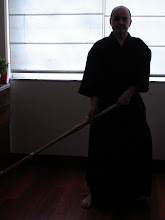
Kodo

Karate Master

sábado, 12 de septiembre de 2015

Jodan

What's the Difference between Syrah, Shiraz and Petite Sirah?

Syrah. Shiraz. Petite Sirah. These wines sound similar and in result, leave people confused what's the difference between the three of them.
Syrah and Shiraz are the exact same grape, much like Pinot Grigio and Pinot Grisare also the same grape. So whether you're drinking a wine that says Syrah or a wine that says Shiraz, the wine is made from the same grape. The French call the grape Syrah, while Australians call the grape Shiraz. If your label says Shiraz, there's a good chance it's from Australia. The rest of the world tends to follow the French and call the grape Syrah, but this is not a strict rule. Syrah is pronounced sih-RAH. Shiraz is pronounced sher-AS (rhymes with jazz).
Over time, however, Syrah and Shiraz have taken on meaning beyond preference of name. Australians like to make big jammy wines from this grape, and wines named Shiraz tend to be in this style. The French make less fruit-forward wines in general, so wines named Syrah tend to be more restraint than Shiraz. This is a general rule of thumb, but not always the case. Keep in mind that although Shiraz and Syrah can be different stylistically, they are still the same grape.
Petite Sirah, on the other hand, is an entirely different grape than Syrah/Shiraz, although it sometimes gets confused because Sirah is pronounced the same as Syrah. Elsewhere in the world this grape is called Durif. Petite Sirah wines are big and inky with tons of dark fruit flavors. Don't make the mistake that this grape is in any way related to Syrah/Shiraz, as people sometimes do.
In short: Syrah and Shiraz are the same grape, both used depending on the brand/winemaker preference. Petite Sirah is a different grape and has no relation to Syrah and Shiraz.

Taken from Vivino (http://www.vivino.com/news/whats-the-difference-between-syrah-shiraz-and-petite-sirah?utm_source=summary_email&utm_medium=weekly&utm_campaign=11-09-2015) accessed at  Sept 12th, 2015

miércoles, 9 de septiembre de 2015

Consejo oportuno para momentos turbulentos

El estado que más conviene al alma es la indiferencia serena
Epicuro. Filósofo griego (341 - 270 aC)


lunes, 7 de septiembre de 2015

Douro profundo

Pinceladas del Duero en la zona viticultora. A poco más de 100 km por carreteras de curvas imposibles se llega desde Oporto a la región donde se cultiva la uva que dará lugar al elixir preciado del vino de Oporto y al muy considerado vino de mesa del Douro. Claro que también se puede llegar por autopista y luego tomar un bote hasta las quintas…pero no es tan romántico, eso sí conservas el estómago en su lugar porque es un viaje para echar los higadillos…


Pulpo á feira

Se trata de un plato estrechamente ligado a la gastronomía gallega pero, ¿Sabemos realmente de dónde procede y cuál es su origen?
Los griegos consideraban el pulpo como uno de los más excelsos manjares del océano, siendo, junto a salmones y lampreas, el plato elegido en ocasiones especiales de los más acomodados. Los maragatos empezaron a utilizar el pulpo seco que los gallegos no utilizaban, hidratándolo, y mezclándolo con aceite de oliva crudo y el pimentón extremeño, con los que comerciaban a diario. Tras observar el éxito del nuevo invento, los gallegos lo incorporaron como plato en sus fiestas regionales, ferias y romerías, y de ahí su nombre, “Pulpo á Feria”.

miércoles, 2 de septiembre de 2015

Demostración de combate

Lástima que los oponentes en los combates reales no esperan a que te prepares…


Pero no deja de ser una demostración curiosa

domingo, 30 de agosto de 2015

Ven septiembre…vuelta al cole

Entre las cosas buenas que tiene el levantarse pronto para volver al trabajo esta el ver salir el sol por el Mediterráneo 

El cementerio de Sinera


El cementerio de Arenys de Mar, también conocido como cementerio de Sinera, es el cementerio municipal de Arenys de Mar. Se encuentra frente al mar, en lo alto del Cerro de la Piedad, a poniente de la población. Es un ejemplo característico de los cementerios marinos mediterráneos. Fue glosado por el poeta Salvador Espriu (que lo bautizó como Cementerio de Sinera, invirtiendo las letras del nombre de la villa). En 1995 fue declarado bien de interés cultural
Constituye un conjunto de arte funerario de gran interés artístico, con sepulcros y panteones de época modernista proyectados y esculpidos durante las dos primeras décadas del siglo XX. Se encuentran panteones de estilos diversos y modernistas, como el panteón de Iu Bosch, del arquitecto Enric Sagnier y obras escultóricas de notable belleza, de artistas modernistas de renombre como Josep Llimona y Venanci Vallmitjana.
En el cementerio se encuentran enterrados Salvador Espriu, y los escritores arenyecs Fèlix Cucurull y Lluís Ferran de Pol.


Se alcanza el cementerio tras una empinada cuesta en la que se encuentran algunos grafittis  con frases de Espriu y mosaicos como el de Sant Elm. 
En la puerta principal el poema último o final al cementerio de Sinera.
 Subiendo por el pasillo principal al final del segundo patio al lado de la balaustrada en un tercer nivel se halla el sepulcro del poeta.


Por todo el cementerio se hallan detalles escultóricos cargados de simbolismo
 y piezas arquitectónicas de cierto relieve como la capilla de la Pietat obra de Enric Sagnier

Destacando obras de Vilamitjana y Llimona


 Junto a lo ya clásico del modernismo, obras de artistas contemporáneos algunas de dudoso gusto pero los comisarios sarcásticos digo artísticos seguro que tienen mejor criterio  que el simple observador :(


 La visita también nos deja alguna imagen para la reflexión

Y desde la puerta misma del cementerio se divisa el Mediterráneo y el puerto de Arenys.


sábado, 29 de agosto de 2015

Left foot

We concentrated on men-uchi last week. We started by hitting men from a static position then progressed through taking just one sliding step, to stepping into distance and striking, through to hitting with fumikomi ashi and then moving into zanshin.  We finished with debana men practice during which a dojo member asked for my advice on why he was having difficulty pushing off to make the strike. Instead of being able to launch an attack at will, all of his weight was moving to the left foot and he needed to readjust his foot position before he could move.
Watching his practice it was obvious that the heel of his left foot was too far off the ground, to the extent that he had no traction to push himself forward.  Instead he had to move his left foot forward each time that he needed to attack. To my mind a lot of energy was being wasted on unnecessary action.
Matsumoto Toshio sensei talked about the sole of the left foot being at a 15% angle from the floor, with the left leg being almost straight and keeping a feeling of tension behind the left knee. If you follow this advice then it is possible to move instantly from any spot. You of course need to keep the distance between your feet constant throughout your keiko, moving the left foot into position whenever your right foot moves, but you should be able to stop at any given time and instantly launch from the back foot.
How far apart your feet should be is open to debate. Conventional kendo wisdom suggests that the big toe of the left foot should be in line with the heel of your right foot and that there should be a fist’s distance separating the width of your stance.  In reality some All Japan class players have a much bigger gap between the forward and rear foot and they have the leg strength to make much longer steps than us amateurs.  I also believe that the fists distance in width is only a guide. In most sports, feet and knees should be in line with your hips. So your feet should be far enough apart for you to be stable and balanced.
The final piece of the jigsaw is to ensure that as you push with the left the right foot moves forward and not up. By keeping a slight bend in your right knee you should be able to make fumikomi with a big slapping sound and not damaging you knee or heel in the process.

Kenjutsu y Battojutsu


jueves, 27 de agosto de 2015

Un paseo por los montes de Teià

Bajando del tren en la estación de Ocata se toma la calle del Dr Agell nada más cruzar la carretera nacional. Siempre subiendo se alcanza la antigua carretera de Teià  y por ella se llega a esta villa motivo de un post anterior donde mostrábamos la iglesia y las casas modernistas (Un paseo por Teià, 22/09/2014). En esta ocasión llegamos al final del pueblo, donde acaban las calles y empieza el monte.  Para andarines andariegos pero no muy exigentes. El camino es una cuesta permanente pero fácil de realizar. No requiere entrenamiento (a no ser que la quieras hacer corriendo!) Las vistas son bellas y la sensación de naturaleza a pesar de estar a un paso de la población se palpa en cada rincón. Sin ir más lejos, entre las piedras abundan las pieles de culebras y se cuentan bayas de múltiples colores.

Al final de una de las cuestas se da uno de bruces con un Cristo Redentor. No es el de Rio de Janeiro pero ya es moral subir una escultura de ese tamaño y peso al medio del monte!

A parte de la tranquilidad del lugar, en estos días de calor a pocos les da por subir montes, de bueno tiene las vistas a la costa del Maresme


Cerca está la Font de la Perdiu (La fuente de la perdiz) de la que no brota agua alguna. Pero el lugar es bueno para el descanso con una mesa de piedra y varios bancos alrededor
No he podido dejar de tomar una instantánea a esta hermosa seta un Suilus collinitus también conocido por estos lares como Pinatell.


Como solo vi esta seta y estaba bien hermosa dejé que siguiera siendo mansión de gnomos en lugar de llevármela  pues poco da para cocinar una única seta.

jueves, 20 de agosto de 2015

Kendo, Kenjutsu & Iaido


To understand the difference in an easy way

martes, 18 de agosto de 2015

How to make a Kendo Do for our wood kendo training dummy

En http://www.bestkendo.com/HowtoDummy.html  o en http://www.bestkendo.com/howtodo.html encontrareis los manuales para elaborar vuestro propio dummy de entrenamiento. Un diseño de David Agüero para Bestkendo

martes, 11 de agosto de 2015

Warriors of Budo


Trailer for our new release Episode Six on Naginata, Jukendo, Tankendo and Jodo. From the Samurai weapon of 12th century Japan, the Naginata, to the weapon that evoked the coming of modern warfare, the bayonet or Jukendo and ending with almost a weaponless art… the short stick or Jodo. Episode six has everything for the follower of Japanese Bujutsu. See more episodes at http://emptymindfilms.com

sábado, 8 de agosto de 2015

Respect your Training Partner

Whatever martial art you train, be it traditional such as Aikido or Karate, or a modern combat system such as Krav Maga or Systema, you will be called upon to practice with a partners or partners at training. Here are a few tips on how not to be the person there that no one wishes to train with.
1, Don’t hurt people, Sounds pretty simple, yet sadly this happens from time to time in training centres. There are times when it is a pure accident and there is little that can be done about it. Yet when it happens because someone is careless that reflects poorly on both the student and the instructor that allows it to continue. It is also generally the fastest way for a club to lose students. People rarely get injured if everyone at training focuses on genuinely respecting their training partner.
2, Remember you partner is allowing you to use their body for practice, – show respect accordingly. Bear in mind that it is a privilege, not a right for another student to offer to train with you. There is no onus on anyone to train with someone if they do not wish to. When I trained Krav Maga there was a student there that had caused three separate injuries to people and as a result when we were asked to pair up for techniques no one would pair up with him.
3, Let your Sensei / Instructor teach your training partner during practice, It is great that you may have a desire to offer help and to repoint your partners technique on the mat. Common sense needs to apply here, it is the job of your Sensei / Instructor to teach your training partner and to repoint their techniques. Whilst you may be quite genuinely wishing to help, often it can be taken in a different way. It is generally okay to offer mild critique, yet its a better idea to let your Sensei / Instructor take it any further. It can also happen that the technique that you are demonstrating may also not be done in the way that your Sensei wishes to teach it.
4, Try to keep talking on the mat to a minimum, It is quite okay to discuss technique on the mat and material associated with how you are going about your technique. Yet its another thing to engage people in unrelated conversations on the mat. All people are different and a number of people like to zone in to their training on the mat. If you wish to discuss Australian Rules Football, your recent trip to Bali or anything along those lines, it is best left off the mat. Your partner may not be as quite as interested or appreciative of it as you may think.
5, Try to pull back on displays of strength / aggression in your techniques. I know of a specific Aikido teacher who appears to have some issues with his small stature, as a result he liked to throw in every bit of extra effort to finish off his techniques to demonstrate just how great his arm locks and so forth work and how painful they can be applied.. I have not seen him in a while and know that several of his students have left with a senior student to start their own club after they got sick of it. (See pt 1). You do not need to prove your strength in every single technique that you do.
There will be people at your Dojo / Training Centre that come from all manner of backgrounds and levels of experience. If you focus on showing genuine respect and support for your training partners it will go a long way in your club. Whilst these tips are about showing respect on the mat, you can also show respect and have a great time together socially by doing as we do in Australia and heading over to the pub for a beer after training where you can discuss as much Aussie rules football as you please! Its quite okay to hang out with your mates after training in a relaxed atmosphere, but hit the zone for training on the mat. Again, try letting old fashioned common sense be your guide.

martes, 4 de agosto de 2015

Kendo, samurai spirit


domingo, 2 de agosto de 2015

Footage of Judo founder Jigoro Kano


The UnderGround Judo Series Footage of Judo founder Jigoro Kano.

Kanō Jigorō was the founder of judo. Judo was the first Japanese martial art to gain widespread international recognition, and the first to become an official Olympic sport. Pedagogical innovations attributed to Kanō include the use of black and white belts, and the introduction of dan ranking to show the relative ranking between members of a martial art style. Well-known mottoes attributed to Kanō include "Maximum Efficiency with Minimum Effort" and "Mutual Welfare and Benefit." 

Angam


This video depicts Angam - a native Sri-Lankan martial art. Not much is known of the history of this art. The videos shows clear influences from both Indian and Chinese origins, in empty-handed as well as weapons techniques, as well as material which appears to be completely original. You can find out more at the follow link: www.angampora.com/angam | If you like this video, please check out Jonathan Bluestein's book, Research of Martial Arts:

miércoles, 29 de julio de 2015

Kendo Old stile

Película filmada en 1930 en el Seneinkan (済), un Dojo que se hallaba en el palacio imperial en Tokio

This motion was filmed in 1930 at Seneinkan (済寧館), a dojo in the imperial palace (Tokyo)


El lechón viajero se halla en Valparaíso


Tal vez casualidad o tal vez causalidad pero subiendo una de las muchas colinas de Valparaíso el Lechón viajero se vió retratado en compañía de otros lechoncillos. Lástima que el men no sea muy reglamentario!

domingo, 26 de julio de 2015

El lechón viajero ataca de nuevo

Viaje a Chile por tres días (Cinco si contamos el día de ida y el de vuelta que se pasan volando y volando es literal no figurado). En el trayecto hacia el hotel de la reunión tomé varias fotos de graffitis, pero el que más gracia me hizo por el mensaje que mandaba es el que os incluyo en este post. Poco a contar de este viaje. Un día volando, tres de trabajo y mañana regreso. Sin embargo, siempre hay tiempo para disfrutar de un instante como la puesta de sol que tomé desde el mirador del hotel
 más imágenes de graffitis en The Graffiti Hunter  (http://thegraffitihunter.blogspot.com)

lunes, 20 de julio de 2015

Why is Modern Art so Bad?


For two millennia, great artists set the standard for beauty. Now those standards are gone. Modern Art is a competition between the ugly and the twisted; the most shocking wins. What happened? How did the beautiful come to be reviled and bad taste come to be celebrated? Renowned artist Robert Florczak explains the history and the mystery behind this change and how it can be stopped and even reversed.

lunes, 13 de julio de 2015

Incomunicados por la comunicación

Paradojas...


domingo, 12 de julio de 2015

Classic collection by Bob Masters


Photos by Bob Masters
(http://www.bobmastersphotography.com/es)